The Cardigan Renaissance: Styling the Once-Frumpy Knit Like It Runs Fashion Now
The cardigan completed fashion’s greatest rehabilitation — from frumpy office layer to the knit that runs outfits — and the styling moves that transformed it are all learnable. The cardigan guide: the comeback, the moves and the selection.

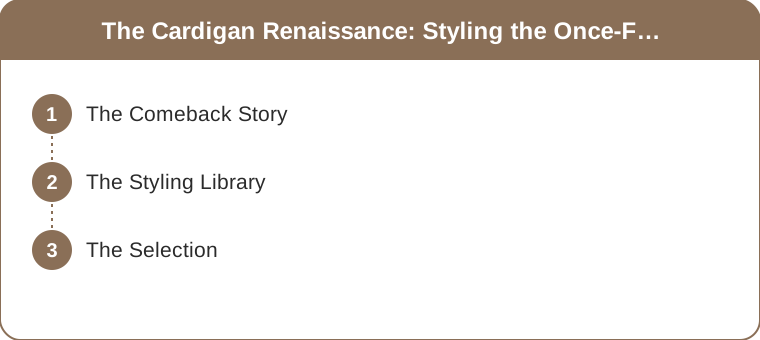
The Comeback Story
How the frump died: the buttoned-as-top revolution (the cardigan worn AS the shirt — the fitted crop buttoned alone; the move that re-coded the whole category), the fit evolution (the shrunken-and-shaped cuts joining the oversized-coatigan pole — the two-lane modernization; the middle-frump abandoned), the styling-context shift (the cardigan over slip dresses and with tailoring — the high-low placements from the contrast logic; the grandpa-cardigan irony worn deliberately per the oversized logic), and the versatility rediscovery (the open-closed-and-shoulder-draped range — the one knit, five functions per the capsule logic).

The Styling Library
The moves: the buttoned-as-top move (the fitted cardigan alone with high-waist bottoms — the neckline button-strategy: the top-button-open frame; the modern standard), the classic-open layer (the cardigan over the tee-and-jeans — the third-piece function from the third-piece logic; the long-over-lean proportions), the coatigan statement (the longline chunky worn as outerwear — the belt conversion from the belt logic; the fall-transition hero per the fall logic), the shoulder drape (the cardigan over the shoulders — the effortless finish from the french logic; the summer-evening tool), the tied variations (the waist-tie and the shoulders-knot — the styling-as-accessory plays per the scarf logic), the tucked-and-half-tucked experiments (the fine-gauge cardigan tucked like a blouse — the unexpected polish), the layered-under move (the fine cardigan UNDER the blazer — the collar-and-button interest per the layering logic), and the dress pairing (the cropped cardigan over the slip-and-midi dresses — the sweetness-structure balance per the dress logic).
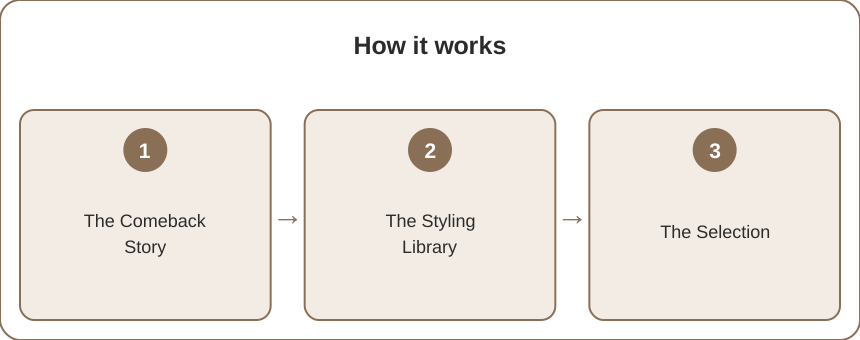
The Selection
The cardigan wardrobe: the core two (the fitted fine-gauge in a neutral — the buttoned-as-top and under-layer piece; the oversized-chunky in a texture — the coatigan-and-drape piece), the fabric standards (the merino-cashmere-cotton hierarchy from the knit logic — the button quality being the cardigan’s jewelry: the hardware upgrade trick; the pearl-and-gold button tiers), the fit checks (the buttoned-as-top candidates fitted through the body — the gape-audit at the buttons per the fit logic; the oversized deliberate per the proportion logic), the color strategy (the near-face flattery from the palette logic — the palette-neutral core with one personality color per the capsule logic), the care notes (the folding-and-depilling disciplines from the knit-care logic — the button-care at washing), and the closing frame (the rehabilitated knit styled to its full range — the top, the layer, the coat, the accessory; the frump, formally buried; the cardigan, running the outfit). Fitted one to button, chunky one to drape, good buttons on both: the renaissance, worn.
The cardigan’s rehabilitation runs on learnable moves: button the fitted one AS a top with high-waist bottoms (the re-coding move), drape the chunky one as a coatigan or over the shoulders, layer the fine-gauge under blazers. Build two — fitted neutral and oversized texture — check the button-gape, and remember the buttons are the cardigan’s jewelry: the hardware upgrade transforms cheap knits.
Keep Reading
This article is for general styling and informational purposes only. Trends, sizing, availability and pricing may vary by brand and season.