The Actual Cause of Knitwear Pilling (It's Not Simply 'Cheap Fabric')
Pilling on a sweater almost always gets read as a straightforward sign of cheap, low-quality fabric — but the actual cause of knitwear pilling involves a specific fiber-length and friction mechanism that’s a lot more interesting than “you bought the wrong sweater.” Even genuinely nice knitwear can pill under the right conditions, and a cheaper sweater can sometimes pill less than you’d expect.
Quick Answer: Pilling happens when short, loose fiber ends work free from a fabric’s surface through friction and tangle into small balls. Fabrics with shorter staple fibers have more of these loose ends to begin with, and friction concentrates the pilling at specific contact points — regardless of how much the garment cost.

What actually causes a sweater to pill in the first place?
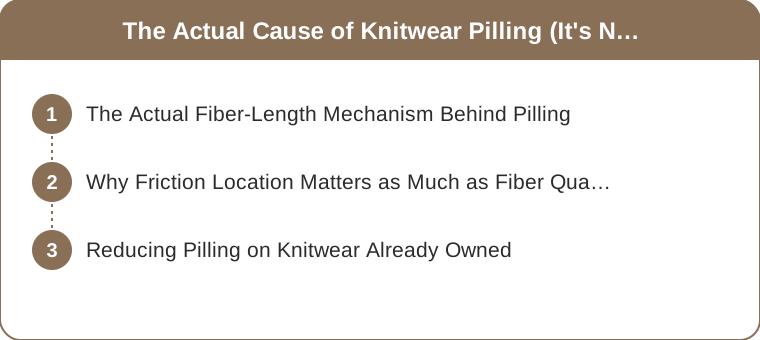
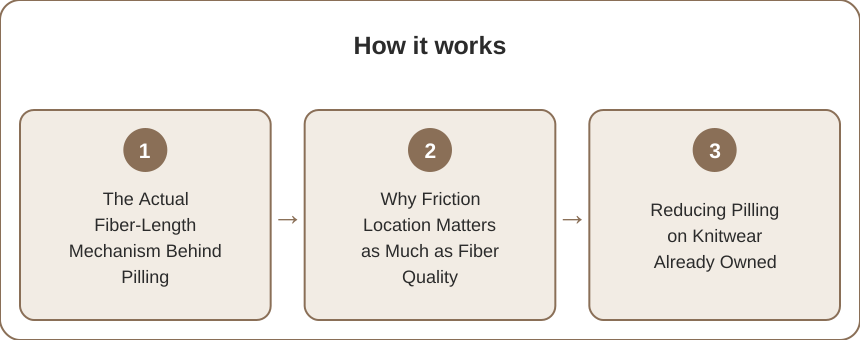
It’s a fiber-length mechanism, not a price tag. Pilling happens when short, loose fiber ends on a fabric’s surface work free from the main yarn structure through repeated friction, then tangle together into the small visible balls you see and feel. Fabrics made with shorter staple fibers genuinely have more of these loose ends available to pill from the start, no matter how expensive the finished garment is — while fabrics made with longer staple fibers simply have fewer loose ends available, so they pill less as a direct result of fiber length, not price.
- Shorter staple fibers (common in some cheaper wool blends, but also some cashmere) = more loose ends = more pilling potential
- Longer staple fibers (like combed cotton or long-staple wool) = fewer loose ends = naturally more pill-resistant
- Fiber length is a manufacturing choice, and it doesn’t always track neatly with retail price

Why does pilling show up in the same few spots every time?
Because friction location matters just as much as fiber quality. Pilling concentrates specifically at high-friction contact points — under the arms, at the sides where a bag strap rubs, at the lower back where a seatbelt or waistband presses — which means identical fabric pills considerably more at those specific spots than everywhere else on the same garment. That’s exactly why pilling on a sweater usually looks patchy rather than spread evenly across the whole piece.
- Underarms and side seams: near-constant friction from arm movement
- Bag strap contact points: repeated rubbing in the exact same spot, day after day
- Waistband and lower back: seatbelt friction or a tucked-in shirt rubbing against a coat
Can you actually reduce pilling on a sweater you already own?
Yes — and it doesn’t require replacing the sweater. Reduce friction at the garment’s own known high-contact points specifically, like rotating which shoulder carries your bag strap and avoiding tucking a sweater into a tight waistband where friction concentrates. Using a fabric shaver regularly on any pills that do form also helps more than people expect, since removing existing pills clears away the tangled fiber mass before it can trap and pull in more of the loose surface fibers nearby.
- Rotate bag straps between shoulders instead of always using the same side
- Avoid tucking knitwear into tight waistbands or under seatbelts when avoidable
- Run a fabric shaver over problem spots every few wears, not just when pilling gets bad
- Hand-washing or a gentle cycle reduces the friction that machine agitation adds
What Nobody Tells You About Pilling
- Cheap and expensive sweaters can pill at nearly the same rate if fiber length is similar
- A fabric shaver used every couple of weeks prevents far more pilling than one used only after it’s already bad
- Pilling location is basically a map of where your body and accessories rub the most
- New sweaters often pill more in the first few wears as loose fibers from manufacturing work free, then settle down
Does pilling mean my sweater is falling apart?
Not usually. Pilling is a surface-level fiber issue, not a structural one — a pilled sweater is typically just as sturdy as before, it just needs the pills removed with a fabric shaver or comb to look fresh again.
Is cashmere supposed to pill less than wool?
Not automatically — it depends on the specific fiber length used, not just the fiber type. Some cashmere uses shorter fibers than some wool, so cashmere can occasionally pill more than a longer-staple wool sweater despite the price difference.
How often should I use a fabric shaver on a sweater that pills easily?
Checking every few wears and shaving off pills as soon as they appear tends to work better than waiting for a heavy buildup — removing small pills early prevents them from trapping more loose fiber and growing larger over time.
TL;DR:
- Pilling comes from short, loose fiber ends tangling from friction — not simply low price
- Shorter staple fibers pill more regardless of how much the garment cost
- Pilling concentrates at specific friction points (underarms, bag strap, waistband), so it looks patchy
- Rotating friction points and using a fabric shaver regularly meaningfully reduces pilling
- Pilling doesn’t mean a sweater is damaged — it’s a surface fiber issue, not a structural one
Keep Reading
This article is for general styling and informational purposes only. Trends, sizing, availability and pricing may vary by brand and season.