Knitwear Notes

Cozy knits that still look polished

The Moth Wars: Storing Knitwear So It Survives the Summer

2026-07-15

Quick Answer: Store knitwear clean, folded, and sealed in a breathable container — that combination is what actually prevents moth damage. Cedar and lavender only discourage moths; they don’t stop them. Clothes moths eat the body oils, sweat, and food residue on wool, so a sweater worn once and put away is the single biggest risk in your closet.

Every October, someone unfolds a favorite sweater and finds a constellation of tiny holes across the shoulder. Six months of storage, undone in one unboxing.

The good news: this is almost entirely preventable, and the prevention happens in July, not October.

The Moth Wars: Storing Knitwear So It Survives the Summer

At a glance

Why Do Moths Eat Sweaters?

They don’t, technically — the larvae do, and they’re not after the wool itself so much as what’s on it.

Clothes moth larvae feed on keratin, the protein in wool, cashmere, silk, and feathers. But they’re strongly drawn to fibers carrying body oils, sweat, skin cells, food traces, and perfume residue. A perfectly clean wool sweater is a mediocre meal. A sweater worn once on a warm evening and folded away is a marked buffet.

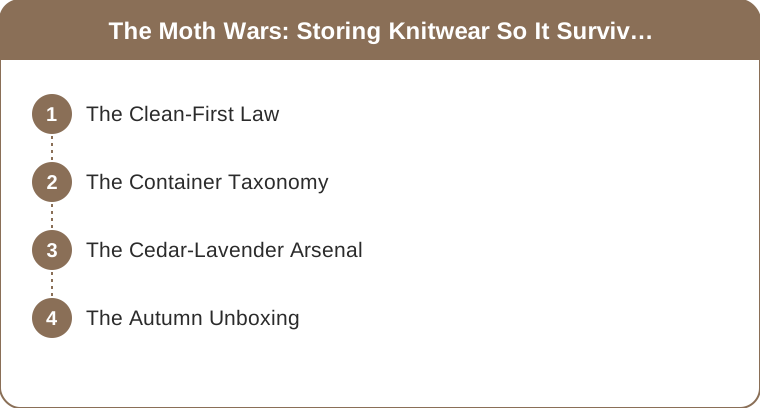
This is why the clean-first rule isn’t optional and isn’t supplementary. It’s the whole defense:

Wash or dry-clean every knit before it goes into storage. Every single one, including the ones you only wore twice, including the ones that “don’t smell.” Invisible residue is exactly what they’re hunting.

The adult moths you occasionally see fluttering out of a closet aren’t the ones doing damage — they’re the signal that eggs have already been laid somewhere nearby.

What’s the Best Way to Store Sweaters for the Summer?

Sealed against moths, breathable for the wool. Those two requirements are in tension, which is why container choice matters.

Ranked, best to worst:

  1. Breathable cotton storage bags or boxes — the gold standard. Woven tightly enough to keep moths out, porous enough that trapped moisture escapes instead of turning into mildew.
  2. Zippered under-bed containers — perfectly fine, provided the contents are genuinely clean and fully dry. Add a cedar block and check them midsummer.
  3. Plastic bins with tight lids — acceptable in a dry climate, risky in a humid one. Trapped moisture is the failure mode here, not moths.
  4. Vacuum bags — avoid for knits. They crush loft and structure, and cashmere in particular often never fully recovers its body. Great for puffer jackets. Bad for sweaters.
  5. Cardboard boxes — worst option. Not moth-proof, absorbs humidity, and the glue attracts silverfish.

Fold, never hang. A hanger puts the entire weight of a knit on two small shoulder points, and over a summer that stretches into permanent shoulder bumps. This is true year-round, not just in storage.

The Moth Wars: Storing Knitwear So It Survives the Summer

Do Cedar and Lavender Actually Work?

Partly — and it’s worth being precise about how partly, because a lot of people rely on them and skip the step that matters.

Cedar releases aromatic oils that repel moths and can kill very young larvae at high concentration. In an open closet, that concentration is nowhere near high enough. In a sealed container it does more. The catch: cedar’s effectiveness fades as the oils dissipate, usually within 6 to 12 months. Sanding the surface lightly with fine-grit paper revives it — the wood is fine, the surface is just spent.

Lavender sachets work on scent alone. Pleasant, mildly deterrent, no larvicidal effect. Replace or refresh with a few drops of lavender oil once a season.

The honest framing: deterrents discourage, the clean-and-sealed protocol prevents. Cedar in a container of dirty sweaters will not save them.

Mothballs do work, and they’re also naphthalene or paradichlorobenzene — genuinely toxic, genuinely carcinogenic in sustained exposure, and the smell embeds in fabric for years. Not worth it. The cedar drawer smells better and the difference is covered by washing properly.

How it works

How Do You Bring Knits Back Out in Autumn?

Inspect first, wear later. The unboxing is where you catch a problem early enough to contain it.

  1. Check every piece in good light, especially underarms, cuffs, and shoulders. Small holes, sandy grit, or silky webbing all mean larvae. Isolate that piece immediately — moth damage spreads between neighbors.
  2. If you find damage, seal the affected knit in a bag and freeze it for 72 hours at 0°F/-18°C. That kills eggs and larvae at every life stage. Then wash it. Then check everything that was stored next to it.
  3. Air everything out for a day. Stored knits come out flat and slightly musty; a few hours of moving air fixes both.
  4. De-pill before the first wear. A sweater comb or cashmere stone, working in one direction, in short strokes.
  5. Wipe down the empty container before it goes back into the closet, and sand your cedar while you’re there.

FAQ

Do moths eat cotton and synthetic clothes?

Rarely as a first choice. Clothes moth larvae need keratin, so wool, cashmere, alpaca, silk, and feathers are the real targets. They will chew through a cotton or synthetic blend if it’s soiled or if it’s blocking access to wool underneath — another reason the clean-first rule applies to everything going into the box.

How do you get rid of clothes moths once you have them?

Empty the closet completely. Freeze or hot-wash every affected item, vacuum the space thoroughly including corners, baseboards, and carpet edges, then throw out the vacuum bag outside the house. Pheromone traps catch adult males and tell you whether the problem is ongoing. Anything valuable and heavily infested is worth taking to a professional cleaner.

Should you wash sweaters before storing or after?

Before, always. Storing dirty is what causes the damage; the residue is the attractant. Wash again in autumn only if the knit smells musty after airing out.

TL;DR

  • Clean every knit before storing. Body oils and food traces are what larvae are actually eating.
  • Fold, don’t hang — hangers deform knit shoulders permanently.
  • Breathable cotton bags or boxes are best; skip vacuum bags and cardboard.
  • Cedar and lavender deter, they don’t prevent. Sand cedar to refresh it every 6–12 months.
  • Freeze 72 hours at 0°F to kill eggs and larvae if you find damage.
  • Inspect at unboxing, isolate anything damaged, air out, then de-pill before wearing.

The moth wars are logistics, not luck — and your favorite sweater’s October depends entirely on its July.

Keep Reading

This article is for general styling and informational purposes only. Trends, sizing, availability and pricing may vary by brand and season.

sweater storagemoth preventionknitwear care

← All articles