Why a Tightly Knit Sweater Resists Pilling Far Better Than a Loosely Knit One of the Same Fiber
Two sweaters made from the exact same wool can pill at completely different rates within the same season of wear, one staying smooth and the other developing little fuzzy balls across the sleeves and torso within weeks, and the difference usually has nothing to do with fiber quality at all — it comes down to how tightly the yarn was actually knitted together.

Why Pilling Starts With Loose Fiber Ends Working Free
The origin: pilling-begins-when-short-loose-fiber-ends-within-the-yarn-work-their-way-to-the-fabric-surface-through-ordinary-friction-from-wear-and-then-tangle-into-small-visible-balls (pilling beginning specifically when short, loose fiber ends already present within the spun yarn work their way gradually to the fabric surface through ordinary friction from everyday wear, and then tangle together into small, visible balls, per the knit-pilling-actual-cause-guide logic — pilling-beginning-specifically-when-short-loose-fiber-ends-already-present-within-the-spun-yarn-work-their-way-gradually-to-the-fabric-surface-through-ordinary-friction-from-everyday-wear-and-then-tangle-into-small-visible-balls), and the reframe (pilling being a migration problem, fiber ends traveling outward, not simply fabric wearing out)).

Why a Tighter Gauge Physically Traps Those Ends
The trap: a-tightly-knit-gauge-packs-yarn-loops-closely-enough-together-that-loose-fiber-ends-have-far-less-physical-room-to-migrate-toward-the-surface-in-the-first-place (a tightly knit gauge packing individual yarn loops closely enough together that loose fiber ends genuinely have far less physical room available to migrate toward the fabric surface in the first place, compared to a looser gauge with more open space between loops, per the how-to-buy-knitwear-that-lasts logic — a-tightly-knit-gauge-packing-individual-yarn-loops-closely-enough-together-that-loose-fiber-ends-have-far-less-physical-room-to-migrate-toward-the-surface-compared-to-a-looser-gauge), and the frame (gauge tightness functioning as a physical barrier to the exact process that causes pilling)).
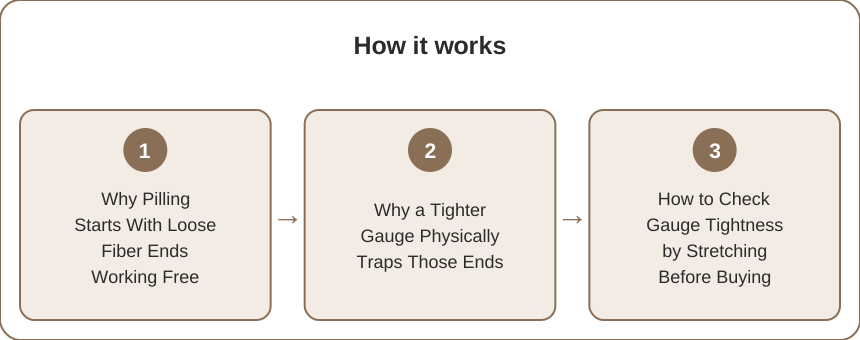
How to Check Gauge Tightness by Stretching Before Buying
The check: gently-stretch-a-section-of-knit-fabric-before-buying-and-look-for-visible-gaps-between-loops-since-fabric-that-shows-daylight-through-it-easily-has-a-looser-more-pill-prone-gauge (gently stretching a section of the knit fabric before buying and specifically looking for any visible gaps opening up between the loops, since fabric that shows daylight through it easily under a light stretch has a genuinely looser, more pill-prone gauge than one that stays dense, per the knit-fabric-quality-guide logic — gently-stretching-a-section-of-knit-fabric-before-buying-and-looking-for-visible-gaps-between-loops-since-fabric-that-shows-daylight-through-it-easily-has-a-looser-more-pill-prone-gauge), and the frame (a simple stretch test at the store predicting a garment’s pilling behavior months before it actually happens).
Pilling begins when short, loose fiber ends already present in the yarn work their way to the fabric surface through ordinary friction, and a tightly knit gauge packs yarn loops closely enough together that those ends have far less room to migrate in the first place. Gently stretching a section of fabric before buying and checking for visible gaps between loops predicts that pilling behavior months in advance, catching a loose, pill-prone gauge before it ever leaves the store.
Keep Reading
This article is for general styling and informational purposes only. Trends, sizing, availability and pricing may vary by brand and season.